
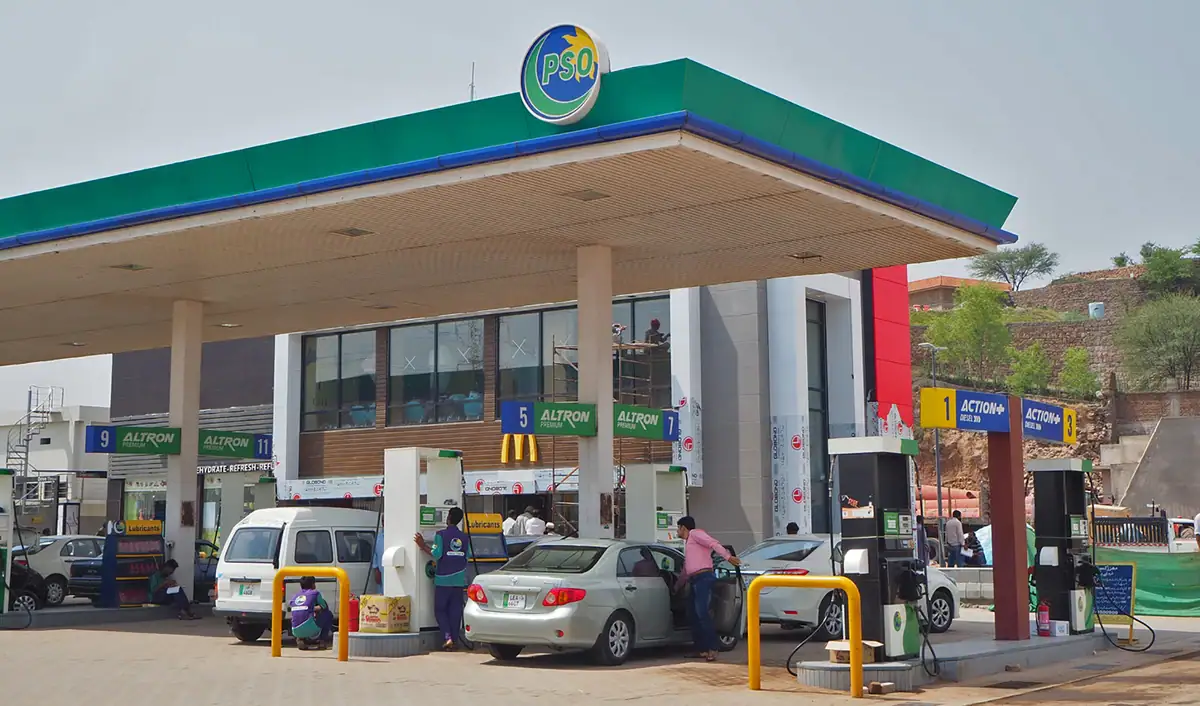
The federal government has reduced petrol prices by Rs2.71 per litre and increased the rate of High-Speed Diesel (HSD) by Re0.31, setting the new prices at Rs379.31 and Rs390.11 per litre, respectively, from Thursday, October 22.
The Petroleum Division issued a notification confirming the revised rates. The government continues to charge Rs114 per litre in taxes and duties on petrol and Rs100 per litre on diesel.
The latest revision comes as international oil prices rose on Thursday following further Houthi attacks in Saudi Arabia, raising concerns about an escalation in the conflict and disruptions to oil supplies from the Middle East.
Brent crude futures climbed $1.93, or 1.77 percent, to $110.75 per barrel, while United States (US) West Texas Intermediate (WTI) crude gained $1.43, or 1.47 percent, to $98.58 per barrel.
The latest domestic price adjustment follows a period of fluctuations in fuel rates amid the conflict in the Middle East. HSD had reached Rs520.35 per litre on April 3 after rising from Rs281 per litre following the outbreak of the US-Iran war on February 28.
Petrol prices also peaked at Rs458.41 per litre on April 3, having started climbing from Rs266 in the first week of March.
The government has reintroduced austerity measures in response to rising fuel prices. Under these measures, markets must close by 9pm, while fuel allocations for official vehicles have been reduced by 50 percent for three months.
On September 13, Prime Minister (PM) Shehbaz Sharif announced a relief scheme for users of motorcycles, rickshaws and vehicles with engine capacities of up to 800cc to ease the burden of rising global oil prices.
Petrol mainly powers private transport, small vehicles, rickshaws and motorcycles, making price changes particularly relevant to middle- and lower-middle-income groups. Diesel, meanwhile, fuels heavy transport, power plants and large generators, meaning changes in its price also affect the wider public.
Petrol and HSD remain the country’s main fuel revenue generators, with monthly sales of around 700,000 to 800,000 tonnes, compared with monthly kerosene demand of about 10,000 tonnes.
